When the Aurora site was secured in 1996, John Sage faced a defining decision—either deliver a standard, low-budget apartment block with basic balconies, or pursue a higher-quality vision that would clearly stand apart from typical residential developments.
Creating a Lasting Vision
For Aurora residents, the building represents far more than a place to live. It is where daily life unfolds, friendships are formed, and personal identity is reflected through the space we call home. A residence becomes a backdrop to life, shaping comfort, connection, and belonging.
John Sage acquired the two parcels of land that would become Aurora on 22 October 1996. At the time, residential property was still recovering from market softness caused by interest rate increases in the mid-1990s. Adding to the challenge, St Kilda Road was widely recognised as an office precinct rather than a residential address.
Once the land was secured, the same question remained—follow a conventional approach with cost-focused design, or create a refined residential development that exceeded expectations and respected the quality of its surroundings.
Melbourne already had developers producing budget-focused projects characterised by repetitive, box-like designs. These buildings prioritised efficiency over aesthetics, an approach John Sage believed was unsuitable for such a premium location.
It was during this phase that John Sage began working with acclaimed architectural designer Nigel Fitton. Together, they committed to developing a bold, contemporary building—one that would combine architectural distinction with exceptional liveability.
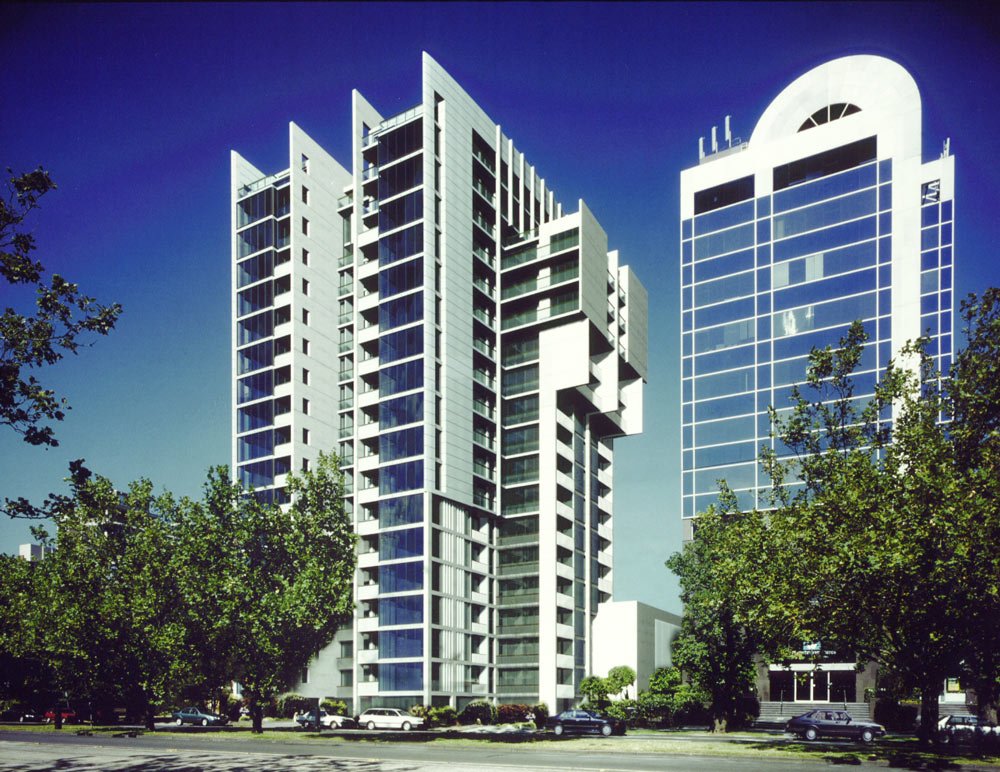
Aurora’s balconies were designed to be larger than standard and structurally integrated into the apartments. This approach improves usability and comfort, eliminating the exposure and instability common with externally mounted balconies.
A centrally managed air-conditioning system services the entire building, avoiding the clutter and inefficiencies of individual units on balconies. While Aurora’s design details are extensive, each element contributes to a more refined residential experience.
One of the most important contributors to Aurora’s quality was the construction system chosen for the project.
Commercial-Grade Construction at Aurora
Typical residential developments rely on tilt-slab construction, which uses large concrete panels to reduce costs. While efficient, this method often limits window size, reduces room proportions, and results in repetitive layouts that feel restrictive.
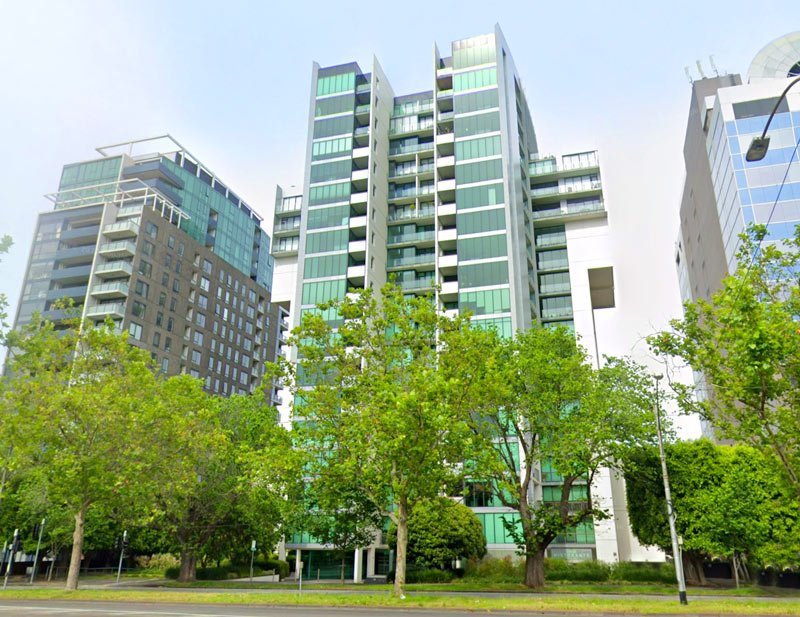
Aurora required a different solution. The objective was to achieve larger living spaces, expansive glazing, and varied apartment layouts—creating a building that felt dynamic and residentially engaging rather than uniform.
An open-engineered commercial construction system was selected. With a central lift core, concrete columns, and post-tensioned slabs, this structure allowed for architectural flexibility and improved internal spatial quality.
Many of Aurora’s distinguishing features are subtle yet impactful. For example, although most St Kilda Road buildings reach 20 storeys within the height limit, Aurora has 19. This decision allowed for increased ceiling heights, delivering a more spacious and comfortable living environment.